



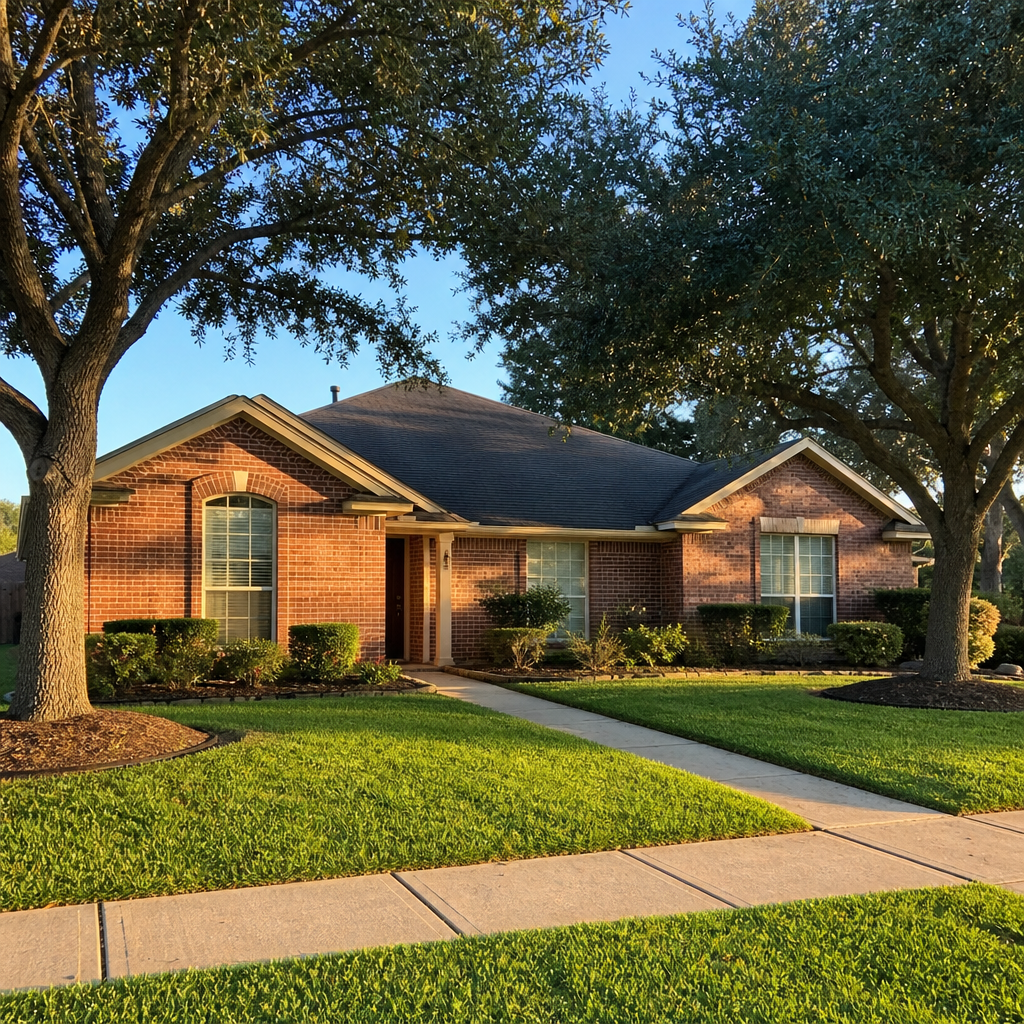
If you want to buy a foreclosed home in Houston, you have three real paths: the monthly trustee auction, a bank-owned listing on the MLS, or a government-owned home like a HUD property. They are very different purchases — different risks, different financing, different timelines — and the right one for you depends mostly on whether you’re paying cash and how much repair risk you can stomach. I’ll walk you through all three the way I would at my kitchen table.
The three ways to buy a foreclosure in Houston
Every foreclosed home you’ll come across in the Houston area is in one of three buckets:
- Trustee auction — the property is sold on the courthouse steps (in Harris County, at the Bayou City Event Center) to the highest cash bidder. Fast, cheap-looking, and by far the riskiest.
- Bank-owned (REO) — the lender took the home back at auction and has now listed it on the MLS through a listing agent. You can finance it, inspect it, and close through a title company. This is where most regular buyers should focus.
- Government-owned — homes backed by FHA, VA, or the big mortgage entities that went through foreclosure. HUD homes are the best-known example, sold through their own bidding site.
If those terms are new to you, I break down how a property moves through each stage in foreclosure vs. short sale vs. REO — what’s the difference.
The trustee auction: first Tuesday, cash in hand
Texas is a non-judicial foreclosure state, which means a lender can foreclose without a lawsuit — and the whole process can run its course in roughly two months, among the fastest timelines in the country. The sales themselves happen on the first Tuesday of each month. In Harris County that’s at the Bayou City Event Center on Knight Road, between 10 a.m. and 4 p.m., with the notices posted at the County Clerk’s office at least 21 days ahead.
Here’s what the auction actually asks of you. You pay cash, that day. You buy the home as-is, sight unseen in most cases, because there is no right to an inspection and often no way to see the inside at all. You get no title policy at the sale, so a title problem — an unpaid tax bill, a lien senior to the one being foreclosed — becomes your problem. And if the former owner is still living there, so is the eviction.
Investors who work the auction every month build systems around those risks: title searches on every notice, drive-bys, repair budgets with fat margins. If that’s not you, the auction is not where I’d start.
Step by step: how to buy a foreclosed home in Houston the practical way
For most buyers, the practical route is a bank-owned home listed on the MLS. Here’s the sequence I use with clients:
- Get your financing set first. Banks want proof you can perform before they’ll take you seriously, so start with a mortgage pre-approval letter — or proof of funds if you’re paying cash.
- Search the actual inventory. Bank-owned homes are listed on the MLS alongside everything else. My Houston foreclosure listings page pulls the current bank-owned, HUD, and pre-foreclosure inventory across the area.
- Underwrite the condition, not the discount. These homes sell as-is. Get the inspection anyway; its job is to price the repairs into your offer.
- Negotiate an option period. An as-is sale doesn’t mean no inspection window. On a bank-owned listing you can still negotiate a Texas option period; the bank just won’t be sentimental about repairs.
- Expect the bank’s paperwork. Banks respond on their own schedule, usually days rather than hours, and they’ll layer their own addenda on top of the standard Texas contract. Read them; they shift risk toward you, and some of it is negotiable.
- Close through a title company with an owner’s title policy. This is the quiet advantage of the REO route over the auction — the title gets cleaned up before you own the problem.
If the home needs real work, ask your lender about renovation financing — an FHA 203(k) or similar loan rolls the repair budget into the mortgage, which is often the difference between “project I can afford” and “project I can’t.”
HUD homes: the government’s foreclosures
When a home with an FHA-backed loan is foreclosed, HUD ends up owning it and sells it through hudhomestore.gov. Two things make HUD homes worth a look for regular buyers. First, bids during the initial exclusive window are limited to people who will actually live in the home, so you’re not bidding against investors on day one. Second, the process is rule-bound and transparent — the posted period, the bid deadlines, the escrow amounts are all published. The catch is that every bid has to be placed through a HUD-registered broker, so that’s a question to ask any agent before you start shopping this lane.
Are foreclosed homes actually cheaper?
Sometimes — and less often than the TV shows suggest. Houston’s foreclosure inventory today is a trickle compared with 2009-2012, and the bank’s asset managers price from the same comparable sales your agent reads. What you’re really buying at a discount is condition and certainty: the price reflects deferred maintenance, no seller’s disclosure from anyone who lived there, and as-is terms. A bank-owned home in Cypress or Katy at 8 percent under the neighborhood’s recent sales isn’t a windfall once it needs a roof and an evaporator coil. The deals are real, but they go to buyers who priced the repairs honestly — the ones who overpay are the ones who counted the discount twice.
Do you need a real estate agent who knows foreclosures?
You need one who has closed them, because the failure points are specific: bank addenda that quietly waive your remedies, earnest-money deadlines that don’t flex, HUD’s bidding mechanics, and the discipline to walk away when the repair math stops working. I’ve been a licensed Texas real estate broker since 1989, and a bank-owned purchase runs on the same standard I hold for any home — the paperwork just bites harder. My compensation as your buyer’s agent is negotiated up front, in writing, in a buyer representation agreement before we tour anything, and in many transactions — including bank-owned sales — the seller still contributes toward that fee. You’ll know the numbers before we start, which is exactly how you should insist any agent work, per the home-buying process I lay out for every client.
Ready to look at the real inventory?
If a foreclosure is on your list — or you just want to know whether the discount is real on a specific house — I’m glad to talk it through with you, no pressure and no obligation. Call or text me at (281) 500-7077, or send me a note and I’ll get back to you the same day.
Last updated: August 2026
