



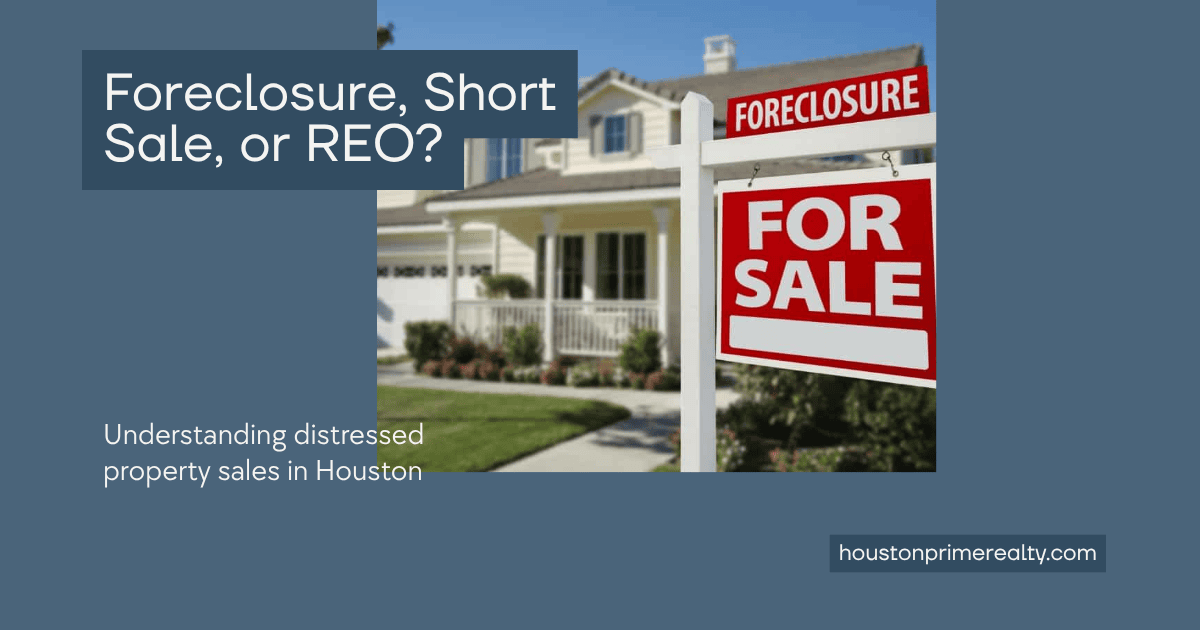
“Foreclosure,” “short sale,” and “REO” get tossed around as if they mean the same thing, but they’re quite different — and those differences change how you buy and how long it takes. Here’s the plain-English breakdown of foreclosure vs short sale vs REO.
Foreclosure
A foreclosure is the forced sale of a home by the lender after the owner defaults on the mortgage. In Texas, foreclosures are auctioned on the county courthouse steps on the first Tuesday of each month. They’re usually bought by the lender itself or by experienced investors paying cash, sight unseen — not a typical path for most home buyers.
REO (Real Estate Owned)
When a property doesn’t sell at the foreclosure auction, the lender takes ownership and it becomes REO — “real estate owned” by the bank. Most homes marketed as “foreclosures” are actually REO listings. These sell like normal listings through an agent, a typical buyer can purchase one, and they usually close in about 30 to 45 days.
Short sale
A short sale is when the owner sells for less than they owe and the lender agrees to accept the shortfall. The catch is time: the lender has to approve the sale, which can add 30 to 90 days or more. Because of that wait, short sales are often bought by investors rather than buyers working on a timeline.
Which is right for you?
Distressed properties can offer good value, but each comes with trade-offs in condition, timeline, and certainty. They’re far less common now than they were after the 2008–2011 housing crash, but they still appear. If you’re considering one, I’ll help you weigh it realistically. More answers are on the foreclosure FAQ, or browse Houston foreclosure listings.
Considering a distressed property?
I’ll help you judge condition, timeline, and true value before you commit. No pressure, no obligation.
Schedule a Free Consultation
Call or Text (281) 500-7077
Kevan Pewitt · REALTOR® & Broker · Houston Prime Realty
Last updated: June 2026 · Evergreen explainer; distressed sales are uncommon in the current Houston market.

Leave a Reply