



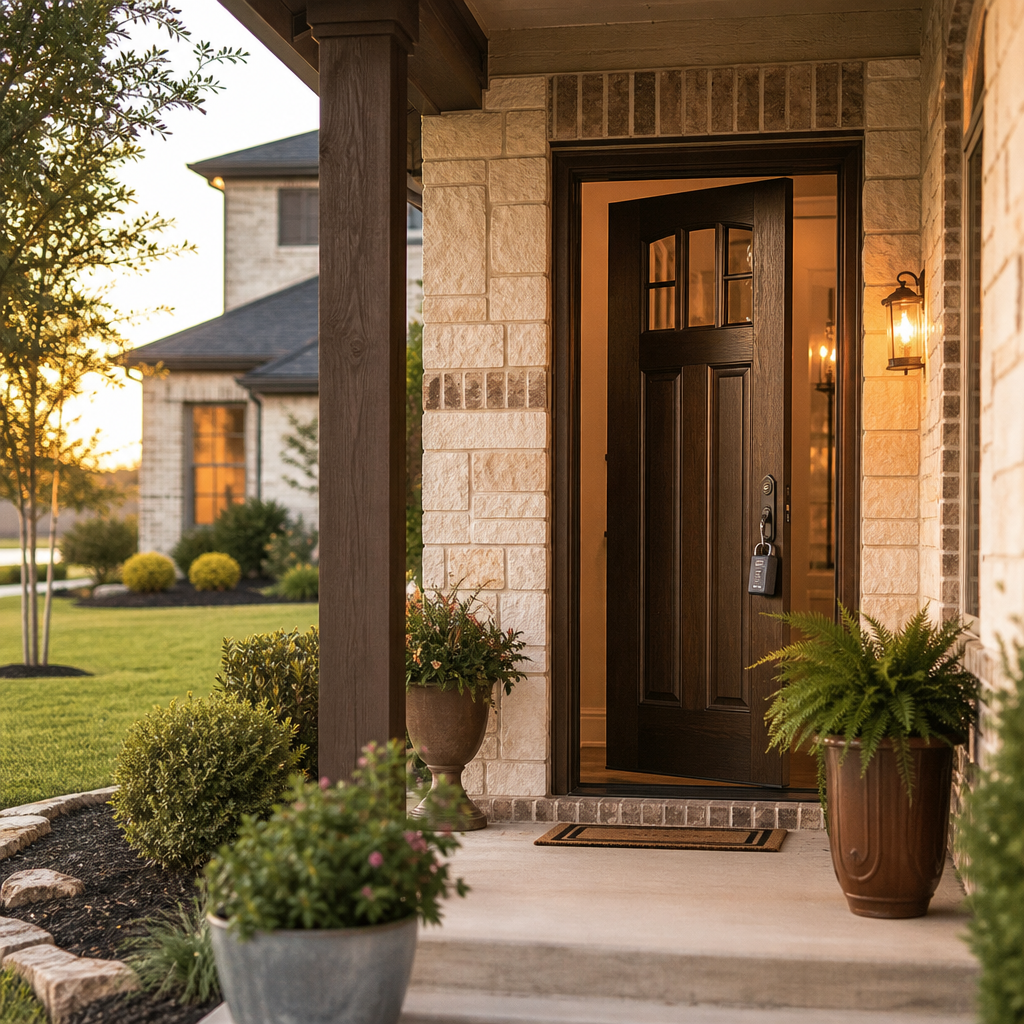
You can buy a home in Texas without your own real estate agent. That’s legal, and nobody will stop you at the door. Most buyers who consider it are doing the same math: no real estate agent on my side means the seller pays less commission, which means a lower price or money back to me. I understand the logic. But buying a house without a realtor rarely saves what buyers expect, and in 2026 the paperwork itself tells you why. The listing agreement Texas sellers sign now includes a line where the seller can agree to pay their own broker more when the buyer shows up unrepresented. The money you thought you were saving doesn’t necessarily stay in your pocket — it may simply change hands, to the side of the table negotiating against you.
The short version: Buying a house without a realtor doesn’t remove the cost of representation — it removes the representation. The 2026 Texas listing agreement (TXR-1101) lets sellers agree in advance to pay their broker an additional fee if the buyer is unrepresented, the showing form you’ll sign instead (TXR-1508) states in plain type that you get no advice and no opinions, and every deadline in a Texas contract still runs whether or not anyone is watching it for you.
Selling, not buying? If you’re weighing a home sale with no real estate agent, the seller-side version of this question is in selling a house without a realtor in Texas, including what you’d still owe the buyer and who pays the buyer’s real estate agent.
Where the money you’re saving actually goes
Start with the document most buyers never see: the listing agreement between the seller and the seller’s broker. The Texas REALTORS® version (TXR-1101, the Residential Real Estate Listing Agreement) was revised for 2026, and Paragraph 5 is where the seller’s broker’s fee gets written down. Here is how the fee section now reads:
“A. Broker’s Fee: When Earned and Payable, Seller will pay Broker (select all that apply; insert amount to be paid to Broker only for services performed under this agreement): (1) ___% of the sales price or a flat fee of $___. (2) An additional ___% of the sales price or a flat fee of $___ if buyer is unrepresented.”
Read that second line again, because it is the whole argument of this post. Before you ever found the house, the seller and the seller’s broker may have already agreed, in writing, with a number filled in, that the broker earns more on a sale to an unrepresented buyer. Show up without your own real estate agent and the commission you planned to save can move straight to the seller’s broker under a contract you were never part of and will never see.
That isn’t sharp practice. The same Paragraph 5 opens by stating that compensation paid to brokers “is not set by law nor fixed, controlled, recommended, or suggested” by any association or MLS, that it is “fully negotiable,” and that each broker independently determines their fees. An unrepresented buyer really is more work for a listing broker: more phone calls, more explaining, more transaction-shepherding that somebody has to do. The form simply prices that work honestly. What the form cannot do is make that extra work into representation. The seller’s broker who earns the additional fee still works for the seller, and so does every dollar of that fee.
So the clean version of the math looks like this: either way, a brokerage fee may well be paid at closing. The open question is whether any of it bought you an advocate.
What buying a house without a realtor looks like at the front door
Texas changed the rules at the front door too. Since January 1, 2026, state law (Senate Bill 1968, now Texas Occupations Code §1101.563) requires a written agreement before a license holder shows residential property to a buyer, unless that license holder already represents the seller. TREC’s plain-language summary of the change is a worthwhile two-minute read. So when you call the number on the sign and ask to see the house, the real estate agent who meets you there will hand you something to sign first. If you’re staying unrepresented, that something is TXR-1508, the Unrepresented Customer Showing Form.
It’s a single page, and to its credit, it hides nothing. Four conditions sit right on the front of it:
- No Representation. “Broker does not represent Customer as Customer’s real estate agent.”
- No Compensation. “Broker will not charge Customer any fee for showing property under this agreement.”
- No Advice or Opinions. “Broker will not provide Customer with any advice or opinions regarding real property or real estate transactions.” The broker may confirm details like size, price, or other terms, and that is the ceiling.
- No Other Brokerage Services. Access to the property, and nothing else.
The form is non-exclusive, ends when the showing ends, and can’t run past fourteen calendar days in any case. I’ve walked through the three forms Texas buyers sign in 2026 in detail elsewhere, so I won’t repeat that here. The point for this conversation is narrower: the state now requires the no-representation arrangement to be put in front of you in writing, in bold type, before you walk through the door. When you tour on a TXR-1508, the person walking you through is there, by the plain words of the form, to open the door and confirm the facts of the listing. Texas REALTORS® published an explainer of the agency-law changes if you want the fuller legal picture.
The seller has an advocate in the room — that’s the point
This part of the story gets told as a cautionary tale, and it shouldn’t be. The real estate listing agent you’ll deal with as an unrepresented buyer is doing their job exactly as Texas law defines it, and the seller is their client.
A real estate listing agent owes the seller loyalty and their best effort at the seller’s goals: the highest price, the strongest terms, the smoothest path to closing. Texas requires them to disclose that to you (it’s the reason the Information About Brokerage Services notice exists), and in my experience they do, plainly and early. But after the disclosure, everything still works the way the notice describes: they advise the seller, and no one advises you. The listing side can be scrupulously fair with you and still, correctly, use everything you reveal in the seller’s interest. Mention that you’re stretching your budget, that your lease ends next month, that you’d probably go higher if pushed — a real estate buyer’s agent is bound to keep that quiet, and the seller’s side is entitled to put it to work.
When both sides are represented, that’s a fair fight, and it produces fair deals. When one side is represented and the other isn’t, nothing improper has happened — the table is simply tilted, and it tilts away from you.
Nobody is running the numbers on your side
Ask yourself one question before making an offer unrepresented: how do you know what the house is worth?
A represented buyer gets a comparable-sales analysis before the offer goes in: what nearby homes actually sold for in the last few months, how long they took to sell, what they conceded on the way, and how many competing listings are sitting unsold in the same neighborhood right now. In a market like this one, with Houston’s active inventory at record levels this summer, that last number is leverage, and it changes street by street. A buyer in Fairfield or Towne Lake who knows there are six comparable homes within a mile, three with price cuts, negotiates a different deal than a buyer who knows the list price and a Zestimate.
A buyer without a realtor prices the largest purchase of their life from the seller’s own marketing. The list price is not a valuation; it’s an opening position, chosen by the seller with their broker’s advice. You can hire an appraisal later, but by then you’re under contract at a number you picked without evidence. Nobody on the seller’s side is obligated to tell you the house down the block closed thirty thousand dollars lower in June. They have no duty to volunteer it, and without your own real estate agent, nobody at the table does.
The deadlines only protect you if someone works them
The Texas contract protects buyers well — on paper. The One to Four Family Residential Contract builds in an option period: a negotiated stretch of days, bought for a negotiated fee, during which you can terminate for any reason and keep your earnest money. It exists so you can get the home inspected and renegotiate, or leave, based on what turns up.
But the option period is not self-operating. Somebody has to negotiate its length before the contract is signed, get the inspector in fast enough to leave time for decisions, read the report and separate the four-hundred-dollar items from the fourteen-thousand-dollar ones, and then run the repair negotiation: deciding what to ask for, how to paper it as an amendment, and whether the seller’s response is worth staying for. Every one of those steps has a clock on it, the clock counts calendar days, and when it runs out, your leverage and your exit go with it. A represented buyer has a person whose job is watching that clock. An unrepresented buyer is learning the rules during the only days the rules can still help them, while the seller’s side, which does this every week, watches the same clock with a professional’s calm.
The same picture repeats at the appraisal, the financing deadlines, the title commitment and survey objection window, and the closing table. None of it is exotic. All of it is work, done under deadline, and going unrepresented means assigning all of it to yourself on the first try.
The model home works the same way — legally, even more so
New construction deserves its own paragraph, because the model home feels like the one place going without your own real estate agent should be safe. The person at the desk is friendly, knowledgeable, and salaried. Surely that’s close enough?
Here’s what most buyers don’t know: the person in the model home may not be a real estate agent at all, and isn’t required to be. The Texas Real Estate License Act exempts a builder’s own employees selling homes the builder constructed, under Texas Occupations Code §1101.005(6). No license, which means none of the duties that come with one: no agency obligations, no required brokerage-services disclosure, no license on the line for how the transaction treats you. Everything I said about the real estate listing agent above applies here without the license act even reaching them. They can be excellent at what they do, and what they do is sell for the builder: the contract is the builder’s contract, the incentives steer you toward the builder’s lender, and the upgrade pricing works exactly as the builder designed it to.
If a new build in Bridgeland, Dunham Pointe, or Elyson is on your list, decide about representation before the first visit — builders generally require your real estate agent to register with you on that visit, so walking in alone can quietly cost you your representation on that community. And the question of who pays your real estate agent’s fee on a new-construction purchase usually resolves in your favor anyway, because builders budget for it as a sales channel.
When buying without your own real estate agent can make sense
There are transactions where buying a house without a realtor is reasonable — I made the same concession to sellers in my for-sale-by-owner post, and it holds on the buyer’s side too. If you’re buying your parents’ house at a price the family already agreed on, a real estate attorney and a good inspector may honestly be all you need. If you’re an experienced investor who has closed a dozen purchases and runs your own comparable sales, you know what you’re carrying. And any buyer, represented or not, should put a licensed inspector and, in an unrepresented deal especially, a real estate attorney on the transaction. Texas gives an attorney the one job no form can do for you: telling you what the contract means before you sign it.
What I’d gently push back on is the middle case, which is most buyers: a first or second purchase, a house found online, a seller you’ve never met. That buyer isn’t saving a fee. As we covered above, the fee may get paid anyway — just to the other side. If that’s you, start with the first-time buyer’s roadmap for Houston and see what the represented version of the process looks like before you decide.
What representation costs — settled in writing before you tour
None of this is an argument that representation costs nothing. What I can tell you is that the cost is negotiated up front, in a written buyer representation agreement, before showings begin: a percentage or a flat amount, your call to accept or negotiate, with the total capped at what the agreement states. In many Houston transactions the seller still contributes toward the real estate buyer’s agent’s fee, and we find out what a particular seller will contribute before you write the offer, so the number is never a surprise. I’ve laid out the mechanics in how real estate buyer’s agent compensation works in Texas, the home-buying process page shows where each step of a represented purchase falls, and if you’re comparing candidates, here are the questions I’d ask any real estate agent before signing — including me.
Weigh that known, negotiated, often seller-assisted number against what this post describes: a possible additional fee to the seller’s broker either way, no one running comps, no one working the deadlines, and a negotiation where every professional in the room answers to the other side. That’s the real comparison — not commission versus no commission, but representation versus its absence at a similar price.
Questions Houston buyers ask about going unrepresented
Do I need a realtor to buy a house in Texas?
Legally, no. You can buy unrepresented. But since January 1, 2026, Texas law requires a written agreement before any license holder shows you residential property, so you’ll sign something either way: a buyer representation agreement that makes you a client, or the Unrepresented Customer Showing Form (TXR-1508), which states that you receive no representation, no advice, and no opinions.
Why do I need a realtor to buy a house if I’ve already found the home myself?
Finding the house is the shortest part of the job. What remains is pricing it against actual closed sales, structuring the offer, negotiating the contract, working the option period and inspection response, handling the appraisal and financing deadlines, and getting to closing with your earnest money protected. That work spans roughly forty days on a typical Houston purchase, and it’s where representation earns its fee.
Do I need my own realtor, or can I just work with the seller’s real estate listing agent?
You can buy through the real estate listing agent as an unrepresented customer, and many people do. Just be clear-eyed about the arrangement: that license holder represents the seller, owes their loyalty to the seller, and in 2026 may be earning an additional fee under the listing agreement precisely because you came unrepresented. They can treat you fairly (most do), but nobody in the transaction is advising you.
Do I need a realtor to buy a new-construction house?
The builder will happily sell to you without one, and the person in the model home may not even hold a real estate license: Texas exempts a builder’s employees selling the builder’s own homes. Your own real estate agent costs the builder a co-op fee the builder has usually already budgeted, brings pricing knowledge from resales and other builders’ contracts, and has to be registered with you on your first visit at most builders, so decide before your first tour.
What paperwork is involved in buying a house without a realtor?
Expect the showing form (TXR-1508) at the door, the One to Four Family Residential Contract with its addenda, the seller’s disclosure notice, HOA and MUD or PID notices where they apply, the title commitment, and lender documents if you’re financing. Every one is binding, several carry deadlines that start the moment they’re delivered, and none comes with anyone whose job is explaining it to you. If you go this route, hire a real estate attorney to review before you sign.
Does buying a house without a realtor save money?
Sometimes — but less often, and less money, than buyers assume. The 2026 Texas listing agreement lets the seller agree in advance to pay their broker an additional fee on a sale to an unrepresented buyer, so the commission you skipped may be paid anyway, just entirely to the seller’s side. Meanwhile the pricing, inspection, and repair negotiations (where represented buyers routinely recover real dollars) happen without anyone working them for you.
Can I buy a for-sale-by-owner home without a realtor?
Yes, and it is the one case where nobody on either side is licensed. The seller still owes you the Seller’s Disclosure Notice, the contract still runs on TREC deadlines, and the title company still closes it. If you go in alone, put a Texas real estate attorney on the contract before you sign. If you’d rather be represented, your real estate agent can work a by-owner purchase the same way as any other; the fee is set in your buyer representation agreement, and whether the seller contributes toward it is negotiated in the offer.
Run the real comparison before you tour
If you’re weighing whether to go it alone, call me and ask directly: what representation would cost on your purchase, what a seller is likely to contribute, and what I’d actually do for the fee. If going unrepresented still makes sense for your situation, I’ll tell you that plainly. Serving Greater Houston, Cypress, and Katy, and also Bryan–College Station.
Or email me anytime at kevan@houstonprimerealty.com
Kevan Pewitt · Real Estate Broker and REALTOR® · Houston Prime Realty
Last updated: October 2026 · Form references are to the 2026 revisions of TXR-1101 (06-15-26) and TXR-1508 (02-25-26); forms are revised periodically, so confirm against the version in front of you. This is general educational information, not legal advice — consult a real estate attorney about your specific transaction.
More on this topic: buying a home in Houston →
