



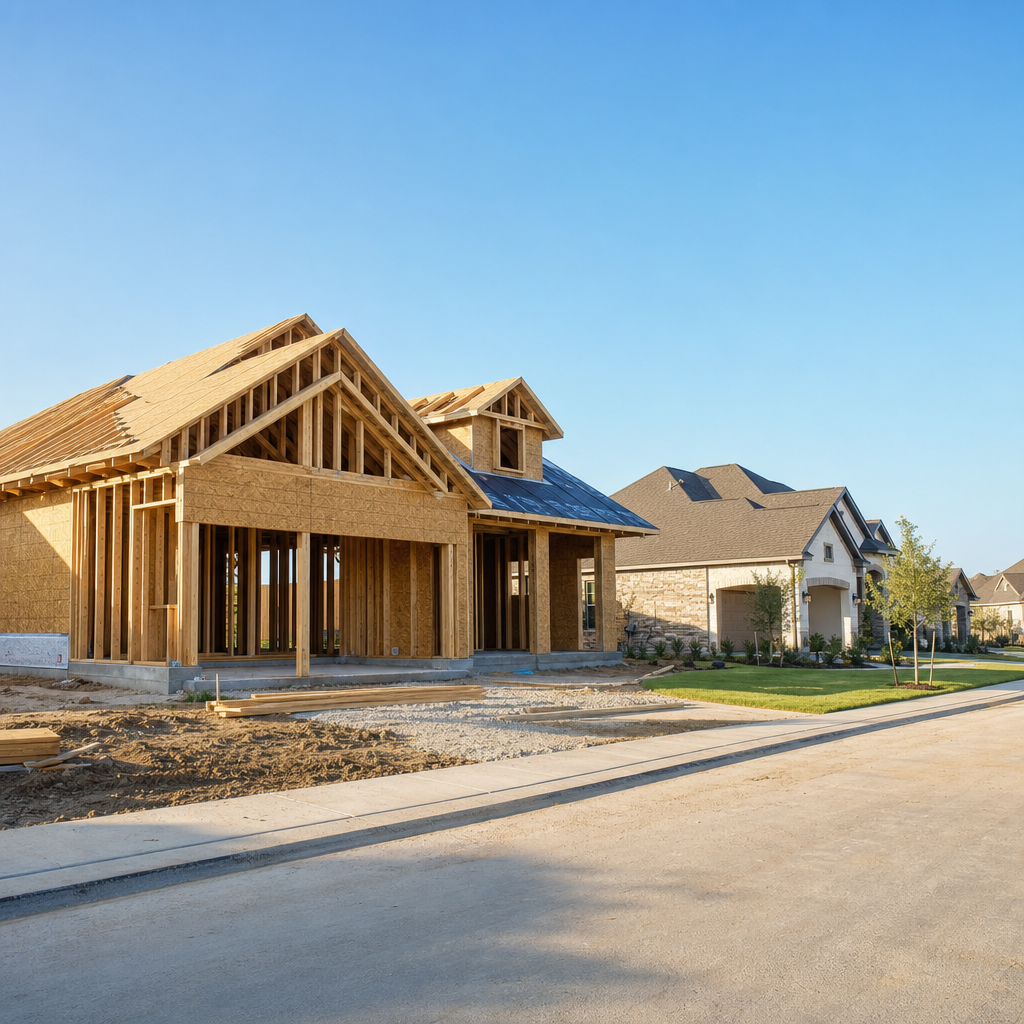
No Texas law requires you to bring your own real estate agent when you buy a new home from a builder — the sales office will write the deal without one, and plenty of buyers do. But everyone in the model home works for the builder, and the contract you’ll sign was drafted by the builder’s attorneys. A real estate buyer’s agent for new construction is the one person in the transaction whose whole job is your side of it: the price, the lot, the contract, the incentives, and the inspections. Here’s what that looks like in practice, and the first-visit rule that can quietly take the choice away from you.
Buying from a builder: the sales office works for the builder
The person who greets you in the model home may not be a licensed real estate agent at all. Texas licenses people who sell real estate on behalf of others, but a builder selling its own homes is exempt under Texas Occupations Code §1101.005, so builder sales consultants are typically employees of the builder, with no real estate license and no fiduciary duty owed to you. The good ones are knowledgeable and helpful, and none of this is a criticism of them. It simply means their job is the builder’s sales goals: moving this section at prices that protect the builder’s comps for the next fifty closings. Nobody in that room is responsible for telling you the base price runs high against recent closings, the lot premium is steep, or the completion-date language gives the builder more room than you’d expect. That’s as true in an established master-planned community like Bridgeland as it is in the newest sections going up along FM 2920 through Hockley.
What a real estate buyer’s agent for new construction does for you
On a builder deal, your own real estate buyer’s agent for new construction covers the jobs the builder’s side has no reason to do:
- Pricing and comps: pulling what the same floor plan actually closed for in that community, including the incentives buried in those closed prices, so you know whether the number on the price sheet is a real number.
- Lot selection: which premiums tend to hold their value at resale and which ones don’t.
- The contract: reading the builder’s purchase agreement with you and explaining, in plain English, what each term commits you to.
- Incentive and lender math: checking whether the builder’s incentive package actually beats what an outside lender offers once you compare full loan costs.
- Inspections and walkthroughs: arranging independent inspections at the right stages of the build and working the punch list before closing.
The contract is the builder’s, not the state’s
When a licensed real estate agent writes a new-home offer in Texas, the state provides the paperwork: TREC promulgates two New Home Contract forms — No. 23-20 for homes still under construction and No. 24-20 for completed homes — which you can read for yourself on TREC’s contract forms page. Those forms include a termination option: for a fee you negotiate, the buyer gets what the contract itself calls the unrestricted right to terminate during an option period. Production builders, though, are selling their own property, so they’re allowed to use purchase agreements their own attorneys drafted instead, and nearly all of them do. Builder contracts commonly ask for larger deposits, give the builder flexibility on the completion date, and leave out the option period the TREC forms carry. None of that makes a builder contract improper, but it was written for the other side of the table, and it deserves a careful read before you sign it. I go through it with you term by term, and when something needs more than a broker’s read — a custom provision, an unusual remedy clause — I’ll tell you it’s time for a Texas real estate attorney.
Lot premiums — and the “no rear neighbors” lots I tell buyers to skip
Builders charge lot premiums for corner lots, cul-de-sacs, greenbelt views, and lots marketed as having no rear neighbors. Some of those premiums are worth paying. The ones I consistently steer my buyers away from are lots backing a busy road, commercial property, a drainage ditch, high-power transmission lines, or a water or sewer treatment plant. The brochure calls it privacy; the resale market calls it road noise and power lines, and buyers down the line will resist the very feature you paid extra for. Before you pay any premium, ask what the lot actually backs to and what’s planned for the empty land behind the fence; in a growing area like the Highway 290 corridor, empty land rarely stays empty.
Incentives usually run through the builder’s lender
Those closing-cost credits and below-market rates on the builder’s sign are usually conditioned on financing through the builder’s affiliated or preferred lender. Sometimes that package really is the best deal available. Sometimes the rate and fees quietly give back most of what the incentive granted. The only way to know is to compare complete loan estimates side by side, which is exactly what I have my buyers do before the design-center appointment locks anything in. I’ve written up how production builders price homes and structure incentives, a monthly roundup of current Houston builder incentives, and the math on whether a rate buydown is worth taking.
Yes, you still inspect a brand-new home
Municipal inspections confirm code minimums, and in fast-building corridors they’re often brief. A brand-new home can close with real defects behind the drywall. On a home built for you, I recommend independent inspections at three stages: before the foundation pour, at pre-drywall while the framing and rough-ins are still visible, and a final inspection before closing. On a completed spec home, you still get a full independent inspection plus the blue-tape walkthrough, and the punch list gets negotiated while you still have leverage. Builders expect this from represented buyers, and a reputable builder will work the list.
Bring your real estate agent to your very first visit
Most builders require your real estate agent to accompany you or be registered on your first visit to the community in order to recognize the representation. If you tour alone and put your name on the sign-in sheet first, many builders will treat you as unrepresented for that community from then on — which means the decision about having your own representation gets made, permanently, in the thirty seconds it takes to fill out a visitor card. Loop your agent in before you drive out. The money side of that same first-visit rule, meaning who actually pays your agent’s fee on a builder deal, is covered in who pays the realtor commission on a new-construction home in Texas.
How I work new construction with my buyers
I’ve been a licensed Texas real estate broker since 1989, and new construction has been part of my practice across the Houston area that whole time — lately in the communities filling in around Cypress, Katy, and the Hockley–Waller corridor, places like Elyson, Sunterra, Dunham Pointe, and Cypress Green. Before your first model-home visit, we talk through your budget and sign a written buyer representation agreement, so my fee is in writing before we look at anything; in most builder transactions the builder contributes toward it, and that gets confirmed in writing too. The National Association of REALTORS® explains how these agreements work in its written buyer agreement guide. From there I register with each community you want to see, pull the closed comps for the floor plans you’re considering, walk the lot map with you before you reserve anything, read the builder’s contract with you before you sign, schedule the independent inspections at the right stages, and stand next to you at the final walkthrough with the blue tape. If you’re earlier in the process, my new homes page covers where Houston-area building is happening, and the home-buying process shows how I work with every buyer, resale or new.
New-construction questions I hear most
Do you need a buyer’s agent for new construction in Texas?
No law requires it — you can buy directly from the builder’s sales office. What your own real estate buyer’s agent adds is the only advocacy in the transaction: comps on the base price, a read of the builder’s contract, independent inspections, and negotiation on incentives and the punch list. Compensation is negotiated up front in a written buyer representation agreement before showings begin, and in most builder transactions the builder contributes toward the fee.
Do I need an agent to buy new construction, or can I just use the builder’s sales office?
You can work with the sales office alone, and the process will feel smooth, because builders are good at closing their own deals. Buying that way rarely lowers the price; builders protect their base pricing to protect their comps. What going alone removes is every person in the transaction whose duty runs to you: nobody reads the contract for your side, prices the lot premium against resale, or checks the preferred lender’s numbers against an outside quote.
Who pays the realtor commission on new construction?
In most Houston-area builder sales, the builder contributes toward your real estate buyer’s agent’s fee through its co-op program, but since the 2024 industry changes nothing is automatic. Your written buyer representation agreement sets the fee, the builder’s contribution gets confirmed in writing, and any difference is a number you see before you sign. The full picture, including all three ways it can land, is in my post on who pays the realtor commission on new construction.
How do I choose a real estate agent for new construction?
Ask how many builder transactions they’ve closed, whether they attend the phase inspections and the design-center appointment, and have them explain how the builder’s contract differs from the TREC forms; the answer will tell you quickly how well they know this ground. Expect a written buyer representation agreement with the fee stated before your first tour. I’ve written a fuller guide on how to choose a REALTOR® that applies here too.
Should I use the builder’s preferred lender?
Sometimes. The incentives tied to the preferred lender can be substantial, and ignoring them without running the numbers would cost you real money. The test is a complete loan estimate from the preferred lender next to one from an outside lender you trust, compared on rate, points, and fees over the time you expect to own the home. If the incentive survives that comparison, take it with confidence.
Touring new construction around Houston?
Talk to me before your first model-home visit, while every option is still open — no pressure, no obligation.
Schedule a Consultation Call or Text (281) 500-7077
Kevan Pewitt · REALTOR® and Broker-Owner · Houston Prime Realty
Last updated: September 2026 · Reflects current Texas new-home buying and post-NAR-settlement practices.
More on this topic: buying a home in Houston →

Leave a Reply