



A $20,000 builder incentive usually isn’t $20,000 off the house. In most Houston-area builder sales, builder incentives are credits you can spend in one specific place: the design center. They don’t touch the base price, the lot premium, or the structural changes that make up most of what you’re paying. I review builder quotes line by line with my buyers in Cypress, Katy, and across the Houston area, and the same confusion comes up on nearly every one. So here’s how production builders actually price a new home, and what that incentive on the banner really covers.
The four-part formula behind every new construction price
Every production builder prices a new home by adding four numbers together:
- Base price — the floor plan itself, built at the builder’s standard finish level.
- Structural and engineering changes — modifications that change the construction, like an added bathroom or an extended garage.
- Lot premium — the extra charge for a homesite that’s better than the community’s base lots.
- Design upgrades — everything you pick at the design center above the included features.
Base price + structural changes + lot premium + design upgrades = your total price. When a builder quote looks confusing, it’s almost always because two of these buckets got blended together on the page, or because an incentive was presented as if it applied to all four when it only applies to one.
The base price covers the floor plan at the standard finish level
The number on the website — “from the $400s” — is the base price: that floor plan, on a base homesite, with the builder’s included features. Included features are the standard finish package, and they vary widely. One builder’s base price in a community like Bridgeland or Elyson might include granite counters and a covered patio; a competitor two streets over might charge for both. Neither builder is doing anything wrong — they’ve just drawn the line between “included” and “upgrade” in different places, which matters enormously when you compare them later.
Structural changes are priced separately — because they change the construction
A fourth bathroom, a fifth bedroom, an extended garage, a covered outdoor living area — each of these changes the construction itself. They alter the slab, the framing, the plumbing runs, sometimes the roofline, so builders price them separately from cosmetic selections and lock them in when you sign the contract. That timing matters: a structural option that costs a few thousand dollars on the order sheet can cost several times that to add after the house is built. If you think you might want the extended patio or the bath off the game room, the time to decide is before you sign the purchase agreement.
Lot premiums: why two identical homes cost different amounts
Walk the same floor plan on two streets in the same community and the price can differ by tens of thousands of dollars — that’s the lot premium. Larger lots, cul-de-sac lots, homesites backing to a greenbelt or a lake, and lots with no rear neighbors all carry premiums over the base homesites. In Houston-area master-planned communities like Towne Lake and Bridgeland, water-view homesites regularly carry the largest premiums in the section, while a slightly wider interior lot might add only a few thousand. The premium is set per lot and printed on the community’s lot map. Here’s the part buyers miss: it’s one of the few numbers in the formula where the builder sometimes has room to move, especially on lots that have sat unsold while a section closes out.
Design upgrades: where the budget quietly grows
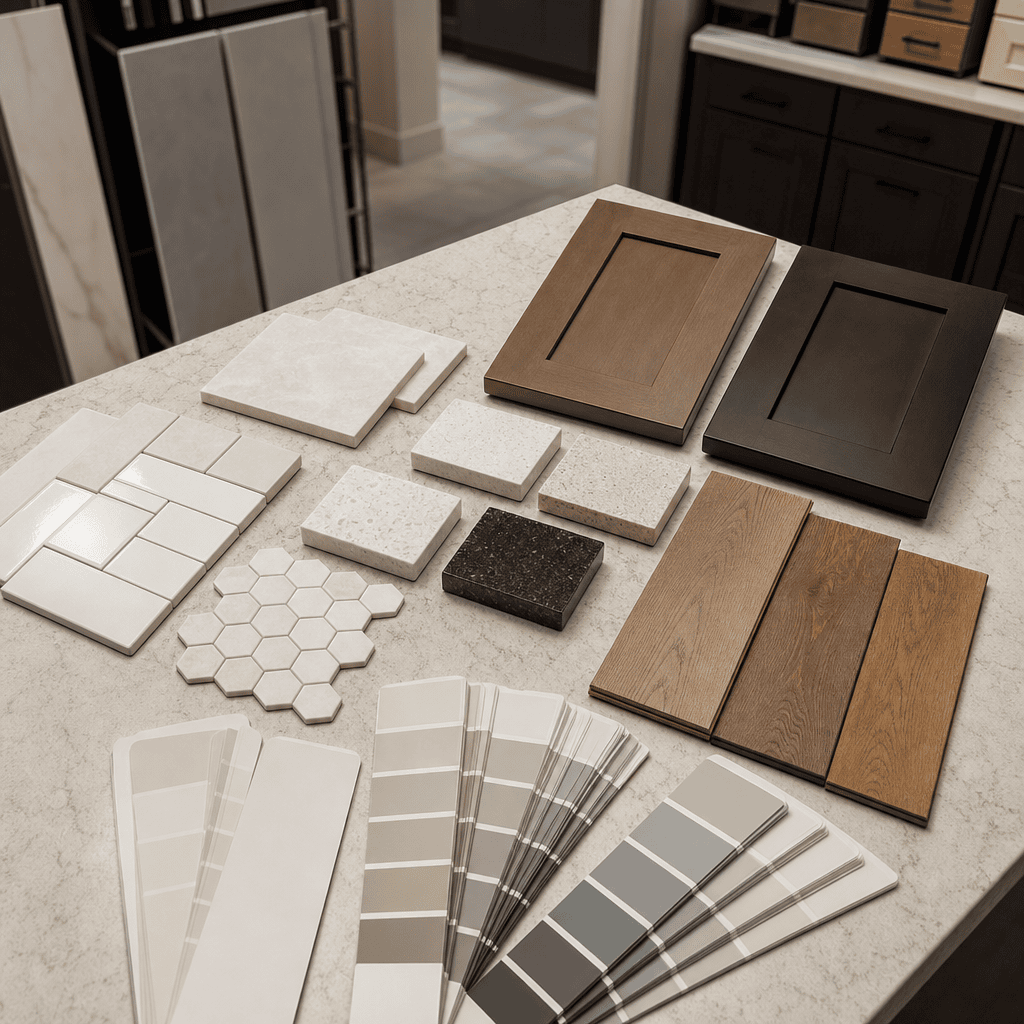
After you sign, you’ll get a design center appointment: a showroom where you select flooring, countertops, cabinets, appliances, and dozens of smaller finishes above the included package. It’s an enjoyable afternoon, and it’s where the total price grows the fastest, because every choice arrives one small decision at a time. Upgraded wood-look tile here, a farmhouse sink there, the cabinet hardware you actually like — it adds up quickly, and the design consultant’s job is to help you love the house. Nobody in that room is watching your budget but you. Going in with a firm upgrade number, and knowing which selections add resale value versus which are purely personal taste, is one of the most useful things I do for new-construction buyers.
How builder incentives really work
Now the banner out front: “$20,000 in incentives.” Here’s the fine print that usually sits underneath it. Most builder incentives are structured as a credit toward design upgrades — meaning $20,000 to spend at the design center, not $20,000 off the home. The credit typically can’t be applied against the base price, the structural changes, or the lot premium, and if you don’t spend it all on selections, you generally don’t get the difference back. It’s real money, but you can only spend it in one room.
Not every builder incentive works that way, which is exactly why you have to ask. Some builders structure incentives as closing-cost credits instead, and many of the strongest current offers are mortgage rate buydowns through the builder’s affiliated lender — I explain how those work in points and 2-1 buydowns, and I track this month’s verified Houston builder offers in a running roundup. Builder incentives also shift between communities, and even between spec homes and to-be-built homes from the same builder. Before you count an incentive as savings, get the answer to one question in writing: which of the four buckets does this actually apply to?
Why this matters when you compare builders
Once you see the formula, comparing builders stops being about whose sign advertises the bigger number. One builder’s $415,000 base price with generous included features can beat a competitor’s $395,000 base that charges for the same finishes as upgrades. A $15,000 design-center credit from one builder and a $10,000 closing-cost credit from another aren’t comparable at face value either, because builder incentives land in different buckets depending on how each company structures them. The only fair comparison is the total configured price for the home you’d actually build, on the lot you’d actually choose, with each incentive counted for what it really covers. That’s a spreadsheet exercise, and it’s one I build with my buyers before they fall in love with a model home. The same exercise works across the aisle: when the other option is a resale where the seller is cutting price or funding a buydown, I line the two deals up on the same five rows in how to compare a builder’s incentives against a resale with seller concessions.
Remember who the sales consultant works for
The person walking you through the model home is knowledgeable, friendly, and employed by the builder. They’re good at their jobs, and their job is selling that builder’s homes. Here’s a detail most buyers never hear: builder sales consultants usually aren’t licensed real estate agents at all — Texas doesn’t require a license for a builder’s own employees selling the builder’s own homes. That means they never owe you the disclosure every licensed real estate agent must provide, TREC’s Information About Brokerage Services notice, which spells out who represents whom in a transaction. So nobody in that sales office is required to represent you — or even to explain that no one does. The builder’s contract is written by the builder’s attorneys, and every number in the formula above was set by the builder’s pricing team. Having your own real estate agent on a builder purchase means someone on your side reading the quote, the contract, and the incentive terms. Under the written buyer agreement rules, your agent’s compensation is negotiated up front and in writing before your first tour. In most Houston builder transactions, the builder pays that fee through its co-op program — I cover the three ways it can land in who pays the realtor commission on new construction. One catch worth repeating: most builders only honor the co-op if your real estate agent is registered on your first visit, so the order of operations matters.
Before you visit the model home
If you’re thinking about new construction anywhere in the Houston area — Cypress, Katy, Tomball, or a community you just drove past — reach out to me before that first model-home visit, so I can register as your real estate agent, walk the builder’s quote with you line by line, and tell you what the builder incentives on the table really cover. Call or text me at (281) 500-7077, or start with my new homes page and the home-buying process I use with every client. No pressure, no obligation — just a second set of eyes on your side of the table.
Last updated: October 2026
