



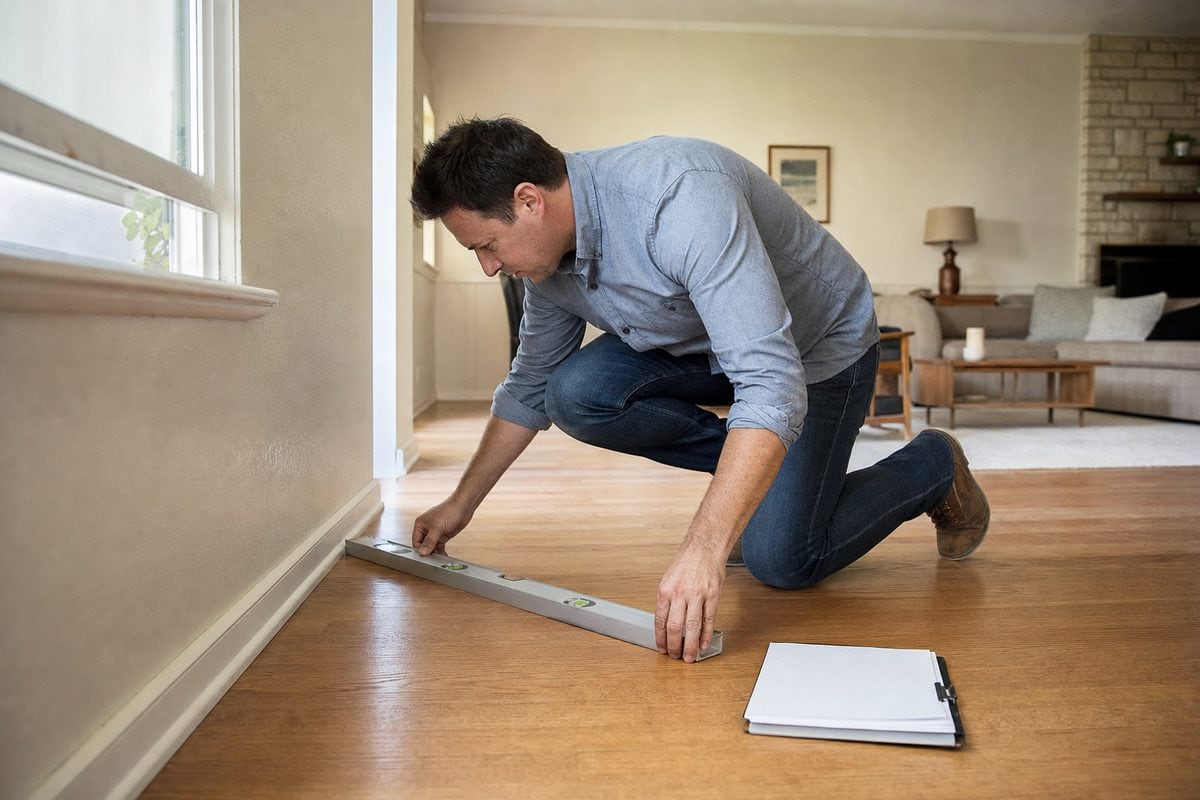
Selling a house with foundation problems in Houston usually fails for a reason that has little to do with the foundation itself. The sale dies because of how the problem surfaces: the inspection report lands in the middle of a short option period, nobody has a structural engineer’s opinion or a repair bid yet, the lender or the appraiser raises a flag, and both sides end up negotiating blind against a deadline. The fix is mostly a matter of sequence. A seller gets the structural engineer’s report and the repair bids before the house is listed, discloses what they say, and either prices the finding in or repairs it with a transferable warranty. A buyer of an older house books the engineer the day the contract is signed and gets the answer on paper before the option period ends. This post is a companion to my guide on what to look for in the inspection report on an older Houston home, which covers the whole report; this one stays on the foundation, and on the sale.
Rules, forms and cost ranges as of October 2026: inspector scope from the TREC Standards of Practice (22 TAC §535.227); contract language from TREC form 20-19 (effective July 1, 2026); disclosure line items from the Texas REALTORS® Seller’s Disclosure Notice (TXR 1406, 06-15-26) and the General Information and Notice to Consumers (TXR 1506); cost bands from Houston-area foundation repair companies’ and home-services directories’ published ranges, checked October 2026. Repair prices move; treat every figure here as a market range and get written bids for the house in front of you.
How a foundation finding actually derails a Houston sale
Here is the sequence I see most often, written in days, because the days are the problem. The buyer and seller sign on a Thursday; call it Day 0. The buyer has negotiated a seven-day option period under Paragraph 5B of the Texas contract, which is typical. The general inspection happens on Day 2 and the report arrives on Day 3 with a line that reads something like “evidence of differential movement observed; recommend evaluation by a licensed structural engineer.” On Day 4 the buyer’s side starts calling engineers. The first two are booked out ten days. A foundation repair company offers to come out the next morning at no charge, and it arrives with a laser level and a proposal for fourteen piers. On Day 6 the buyer has a repair proposal and no engineer, the seller has a number they were not expecting and no independent opinion to weigh it against, and the buyer’s lender, once it hears the word foundation, is going to want a structural engineer’s report too. The option period ends at 5:00 p.m. on Day 7.
At that point the two sides are negotiating blind. The buyer does not know whether the movement stopped years ago or is still going, so the only safe assumption is the expensive one. The seller cannot tell whether the fourteen-pier proposal is a cure or a sales pitch. Neither side has a bid they trust, so the amendment that goes out on Day 6 is either too large for the seller to accept or too small for the buyer to feel safe with, and the simplest decision available to the buyer is the one the contract hands them: give notice of termination before the deadline and get the earnest money back. The house goes back on the market with its days-on-market count reset, and the next buyer’s inspector writes the same sentence. The seller, who may not have known about the movement before, now does, and the disclosure has to say so.
Nothing in that story is a foundation failure. It is a timing failure and an information failure, and both are fixable, on either side of the table, if the structural engineer’s report and the bids exist before the clock starts.
What the home inspector can and can’t tell you
A Texas home inspector works under the TREC Standards of Practice, and 22 TAC §535.227 describes the inspection as a limited visual survey and basic performance evaluation. On the foundation that means the inspector reports what can be seen: cracks at the corners of openings, doors out of square, stair-step cracks in brick veneer, slope they can feel or measure. The rules do not ask the inspector to decide whether the movement is still happening, and many say so in the report. Whether a slab has finished moving or is still going is a question for a licensed structural engineer, and an engineer is the one person whose answer a seller, a buyer, a lender and an appraiser will all take at face value. My older-home guide walks through how the foundation line in the report fits with the rest of the findings; the short version is that “evidence of movement” is a flag that says go get the engineer, and nothing more than that.
The structural engineer’s report: what it is, what it costs, and why it settles arguments
A structural engineer’s foundation evaluation is a site visit by a Texas-licensed professional engineer, a relative elevation survey of the slab or the floor (readings taken at points across the house to map which areas are high and which are low), a review of the visible distress inside and out, and a written report with the engineer’s opinion. The report usually says one of three things: the movement is within normal tolerance for a house of this age and type and no repair is recommended; the movement is historic and the house is performing acceptably, with maintenance recommendations about drainage, watering and trees; or the movement warrants repair, in which case the report describes where and often includes a pier layout the contractor can bid against. Ask for the elevation readings along with the report, because the readings are what a second engineer or a repair contractor will work from later.
Across Houston-area home-services directories’ published ranges, a residential foundation evaluation with a written report runs roughly $300 to $1,000 as of October 2026, with the higher end for larger houses or a full pier design. Set that against the figures later in this post and it is the cheapest number in the whole conversation.
The structural engineer’s report beats a repair company’s opinion for one reason, and I said it in the older-home guide: the engineer has no repair to sell. A foundation company’s no-cost evaluation is, however professional, a sales visit, and a proposal for piers is not evidence that piers are needed. A structural engineer’s written report has ended more foundation disputes in my experience than any second repair bid has, because both sides can read it without wondering what the author gains. The lender and the appraiser lean on it for the same reason. If the report recommends repair, the repair companies then bid against the engineer’s plan instead of their own, which is how you get bids you can compare.
The part sellers and buyers both underestimate is the calendar. Engineers who do residential work in Houston are busy in the dry months when slabs move most, and a week or more to get one on site is common, with the report following a few days after. That lead time is exactly why a seven-day option period so often runs out before the answer exists, and it is the whole argument for ordering the engineer before you need the answer.
If you’re the seller: selling a house with foundation problems in Houston starts before the sign goes up
If you know or suspect your house has moved, the structural engineer’s report and two or three repair bids are the smallest check you will write in the sale. For the price of the evaluation you find out, in your own time and before any buyer is involved, whether you have a maintenance note or a repair, and what the repair costs. That changes every conversation that follows. A buyer who gets a seller’s structural engineer’s report and a transferable repair bid with the disclosure is reading a known quantity; a buyer who finds “differential movement” on Day 3 of a seven-day option period is reading a mystery, and mysteries get priced at the worst case or walked away from.
The disclosure is where the report goes to work. The Texas REALTORS® Seller’s Disclosure Notice (TXR 1406) asks the question in three places. Section 2 asks whether you are aware of any defects or malfunctions in a list that includes “Foundation / Slab(s)” and “Other Structural Components.” Section 3 asks whether you are aware of a list of conditions that includes “Settling,” “Soil Movement,” “Improper Drainage,” “Previous Foundation Repairs,” “Previous Other Structural Repairs,” and, new on the 2026 form, “Alkali-Silica Reaction (ASR) or Concrete Cancer.” Each yes gets an explanation, with extra sheets if you need them. And Section 11 asks whether you have received any written inspection reports or evaluations in the last four years, including “structural/foundation,” and tells you to attach copies, so the structural engineer’s report you ordered will travel with the house. My post on the Texas seller’s disclosure covers the duty itself, and what happens when a buyer doesn’t get the disclosure covers the buyer’s remedy; here the point is simpler. A disclosed, documented foundation is a known quantity, while an unknown one surfaces in the buyer’s option period with a price attached to it.
The Texas REALTORS® General Information and Notice to Consumers (TXR 1506), which buyers receive early in a transaction, states the mechanism in a few plain sentences, quoted here because the form says it as well as I could.
“Soil conditions vary greatly throughout Texas. Many soils will move; some more than others. This movement will, many times, affect the foundation of homes and buildings and may cause cracks to appear in walls or other parts of the building. … Seasonal changes in the moisture in the soil may also cause foundations to move.” — TXR 1506, Expansive Soils
That paragraph is why a Houston buyer’s inspector writes the movement sentence so often, and why a seller with a structural engineer’s report saying the house is performing acceptably is in a strong position: the form itself tells the buyer to expect some movement in Texas soils. The same form’s paragraph on ASR, the concrete reaction the 2026 disclosure now asks about, says diagnosing it “requires testing by a licensed structural engineer,” which is one more reason the engineer is the first call.
With the report and the bids in hand you have three ways to list. You can price the repair in and disclose it, handing the buyer the report and the bids so they can see where the number came from. You can repair before listing, which works when the contractor is one a buyer would hire on their own, the work is permitted where the city requires it and documented, and the warranty transfers to the buyer. Or you can list at a price that assumes the repair and offer a credit, letting the buyer choose the contractor and hold the warranty in their own name. On an older house I usually lean toward the price or the credit rather than a seller-performed repair, with one exception: a repair done by a reputable contractor with a transferable warranty is often worth more to a buyer than the credit would be, because it comes with the paperwork the buyer would otherwise have to create.
If you go the repair route, the contract has rules for it. Paragraph 7F of TREC form 20-19 governs any repair the seller agrees to perform, and read it before you sign anything with a contractor.
“The repairs and treatments must be performed by persons who are licensed to provide such repairs or treatments or, if no license is required by law, are commercially engaged in the trade of providing such repairs or treatments. Seller shall: (i) provide Buyer with copies of documentation from the repair person(s) showing the scope of work and payment for the work completed; and (ii) at Seller’s expense, arrange for the transfer of any transferable warranties with respect to the repairs and treatments to Buyer at closing.” — TREC form 20-19, Paragraph 7F
Two practical notes follow from that language. First, the warranty transfer is the seller’s job and the seller’s expense, and many foundation companies handle it with a transfer form and sometimes a fee, so ask about both when you hire the contractor. Second, the same paragraph allows a closing extension of up to five days when the repairs are not finished, and a pier job that slips past that window becomes an escrow holdback conversation, which has its own post.
If the house was repaired before you owned it, or you repaired it years ago, the same documents do the work: the structural engineer’s report from that repair, the contractor’s repair map showing where the piers went, the invoice, and the warranty with its transfer terms. A prior repair with its paperwork usually answers the buyer’s question before it is asked. A prior repair is only as good as its paperwork and the crew that did it; my post on buying a house with foundation repair in Houston covers foundation and drain-line repairs done wrong, and how to check someone else’s work.
One housekeeping item: keep the utilities on from listing day through closing. Once you are under contract, Paragraph 7A requires it, and an engineer or a plumber cannot do their work in a house with the water off (a hydrostatic test of the drain lines still needs your separate written authorization under the same paragraph).
If you’re the buyer: the engineer goes on the calendar on day one
If you are under contract on a 1950s to 1980s Houston house, book the engineer the day the contract is executed, before the general inspection report arrives; on a house that age the movement question is almost always going to be asked, and waiting for the report to ask it spends half the option period on hold. The Texas option period post explains the clock; the practical rule here is that the engineer’s site visit needs to happen with at least three days left, so the report can arrive and an amendment can go out with two days still on the clock for the seller to answer.
When the structural engineer’s report comes back recommending repair, the finding becomes one of four things, and the first three are written up on an amendment: the seller repairs it before closing under Paragraph 7F, with licensed work, documentation and a transferable warranty; the seller credits your closing costs and the work happens after closing with a contractor you chose; the price comes down by the amount of the bids; or you give notice of termination inside the option period. The mechanics of how a credit has to be written since the 2026 forms are in what Houston buyers should know about the 2026 Texas contract changes, and I won’t restate them. On a foundation I usually ask for the price reduction or the credit, so that the contractor and the warranty are my buyer’s, unless the seller has already lined up a contractor my buyer would have hired anyway, with a warranty that transfers; then a seller-performed repair with the paperwork can be the better outcome. If the work cannot finish before closing, the escrow holdback is the tool.
The walk-away math is simpler than buyers expect. Add the engineer’s recommended repair at the bids you have, the drainage work the report asks for, and a reserve for what the piers may uncover under the slab, and compare that total to the gap between the price and what the house would be worth with the work done. If the seller will not close that gap on paper, and the report says the movement is active, the option period has given you an unrestricted right to leave, and this is what it is for. If the report says the movement is historic and the house is performing acceptably, you are usually looking at a maintenance item and a reason to keep the gutters working, and the right amendment may be no amendment at all.
What the lender and the appraiser will do with a foundation finding
A foundation note travels to two more readers once a loan is involved, and both can stop a sale that the buyer and seller have already agreed on. The appraiser notes visible structural defects as part of the inspection of the property, and when the movement is more than cosmetic the appraisal can come back subject to an engineer’s inspection and certification that the foundation is sound or has been repaired. My posts on what appraisers look for and the home appraisal checklist cover the appraisal as a whole; in appraisal practice the foundation question is the same one the engineer answers, which is whether the house is performing as it should, and a structural engineer’s report already in the file is usually what closes it.
The loan program decides how hard the line is. For an FHA loan, HUD Handbook 4000.1 requires the lender to confirm that the foundation will be serviceable for the life of the mortgage and adequate to withstand normal loads, and when the appraiser cannot confirm that, the lender may order an inspection from a qualified party. A foundation that does not meet that standard becomes a condition of the loan. VA loans have their own property requirements, and conventional lenders set their own conditions; on any loan the practical answer is to ask your lender early, in writing, what a foundation note on the appraisal will require. The contract already anticipates this situation in Paragraph 7E.
“Unless otherwise agreed in writing, neither party is obligated to pay for lender required repairs, which includes treatment for wood destroying insects. If the parties do not agree to pay for the lender required repairs or treatments, this contract will terminate and the earnest money will be refunded to Buyer. If the cost of lender required repairs and treatments exceeds 5% of the Sales Price, Buyer may terminate this contract and the earnest money will be refunded to Buyer.” — TREC form 20-19, Paragraph 7E
Read that paragraph as a seller and the pre-listing engineer makes even more sense. A lender-required foundation repair that neither side has agreed to pay for ends the contract on its own, after the option period, after the buyer has paid for an inspection and an appraisal, and after you have taken the house off the market for three or four weeks. A structural engineer’s report that already says the foundation is performing acceptably, or a documented repair with a transferable warranty, is what keeps that paragraph from ever coming up.
What foundation repair costs in Houston, and what each method involves
Whether you are selling a house with foundation problems in Houston or buying one, the bids will describe the same few methods. Houston foundation repair is mostly underpinning: supporting the slab from below on piers that reach past the active clay to stable soil, then lifting the low side back toward level. There are three common pier types here and two slab-lifting methods, and the structural engineer’s report will usually say which one fits the house.
- Pressed concrete piers. Precast concrete cylinders pushed into the ground in segments under the weight of the house until they reach refusal. The most common and least expensive method in Houston.
- Steel piers. Steel pipe sections driven the same way, usually to greater depth. Costlier per pier, and many companies attach their longest warranties to them.
- Drilled bell-bottom piers. Holes drilled to depth with a flared base, filled with reinforced concrete and left to cure before the house is lifted. The traditional Houston method, slower to install because the concrete has to cure, and rarely published as a per-pier price; it is bid by the job.
- Mudjacking and polyurethane injection. A slurry or an expanding foam pumped under a settled slab section to raise it. Appropriate for a garage slab, a porch or an interior low spot that is not a structural problem, and not a substitute for piers when the engineer says piers.
- Drainage, root barriers and watering. Gutters and downspout extensions, regrading, French drains, root barriers between large trees and the slab, and a soaker-hose routine in the dry months. This is prevention and maintenance, and it is what a structural engineer’s report recommends on a house that has moved and stopped.
Cost ranges as of October 2026. Houston-area foundation repair companies publish installed per-pier ranges that run from roughly $450 to $900 for pressed concrete piers at the low end of the market to $1,000 to $3,000 per concrete or steel pier at the higher end, with steel generally above concrete at any given company; a typical Houston job lands between about $3,500 and $10,000, and whole-house leveling, which on a typical Houston house can mean twenty or thirty piers, is published at $15,000 to $30,000. Slab lifting by mudjacking or foam is published at a few hundred to $1,500 per section, and drainage systems at $2,500 to $10,000 depending on the design. Those are the companies’ own ranges, they vary with the house and the company, and the only number that matters is the one on a written bid against the engineer’s plan.
The warranty is the part of the bid to read twice. Many Houston foundation companies offer a lifetime warranty on their piers, often transferable to a future owner, and the terms vary by company: some transfer at no cost, some charge a fee, some require an inspection at transfer, and most cover adjustment of the piers they installed rather than new movement elsewhere in the house. The point is to ask for the warranty document before you sign, whether you are the seller choosing a contractor or the buyer evaluating a repair the seller already did. Where a foundation that moved also sheared a joint in the drain lines under it, which is common on a pre-1975 slab, the plumbing becomes its own negotiation, and my post on cast iron pipes under the slab covers that side of the same house.
Where this comes up most in Houston
The foundation conversation follows the same postwar map as the drain-line conversation: the slab-on-grade neighborhoods built between the late 1940s and the early 1970s on the northwest, west and southwest sides, with Garden Oaks, Oak Forest, Spring Branch, Sharpstown, Meyerland, Westbury, the early sections of Memorial and the original sections of Jersey Village as the usual examples, and the same vintage of house in older pockets of Pasadena, Bellaire, Clear Lake and Spring. The cast-iron post has the era-by-era detail. The pier-and-beam houses mixed into the oldest of those neighborhoods move on the same clay, through their sills, piers and shims rather than a slab, and an engineer evaluates them from the crawlspace. Newer subdivisions are not exempt; a 1985 house in Copperfield or a 2005 house in Katy sits on the same kind of clay, and the Foundation Performance Association, a Texas nonprofit of engineers and contractors working on residential foundations, publishes a homebuyers’ guide to foundation evaluation and an owner’s guide to maintenance that apply to all of them. My work covers older houses and newer ones across the Greater Houston area, and the questions are the same wherever the house sits: what the engineer says, what the paperwork shows, and what it costs to settle it. For the build year and any prior permits on a specific house, start with the Harris Central Appraisal District (HCAD) record or your county’s appraisal district.
How I handle it for my clients
As the real estate listing agent on a house that has moved, I order the engineer before the photographer. Selling a house with foundation problems in Houston goes better when the answers exist before the first showing, so the report, the elevation readings and two or three bids against the engineer’s plan go into the listing file with the seller’s disclosure, and we decide together whether to price it in, repair it with a transferable warranty, or offer a credit. A buyer’s inspector who writes the movement sentence then finds the answer already waiting, and the amendment, if there is one, is written against numbers both sides can see.
As a real estate buyer’s agent on a 1950s to 1980s house, the engineer goes on the calendar the day the contract is executed, alongside the general inspection and, on a pre-1975 house, the sewer camera. When the report arrives I read it with my buyer and we settle what to ask for and when, usually an amendment with bids attached and at least two days left on the option period for the seller to answer. If the seller’s own structural engineer’s report and repair paperwork are already in the disclosure packet, we read those first, and sometimes the right move is to accept them and move on.
Any real estate agent you are considering, on either side of a house that has moved, should be able to answer these from experience: whether they call an engineer or a foundation company first, and why; what the seller’s disclosure asks about foundations and prior repairs; what Paragraph 7F requires of a seller-performed repair and how a warranty actually transfers; what a lender can require after the appraisal; and which they prefer on a foundation finding, a credit, a price reduction or a seller repair, and when that answer changes. Listen for specifics in the answers. My guide on how to choose a real estate agent in Houston covers the rest of the interview, the selling with Houston Prime Realty page puts the pre-listing work in the full listing timeline, and the home-buying process page does the same for the option period. Compensation for my work with buyers is set out in a written buyer representation agreement before we see a house together; in my own practice it has always been handled within the transaction, and the details are in that agreement.
Foundation problems and the sale, questions answered
Can you sell a house with foundation problems in Texas?
Yes. Texas law requires you to disclose what you know about the condition, including the foundation, settling, soil-movement and prior-repair lines of the seller’s disclosure, but nothing requires the foundation to be repaired before a sale. Houses with foundation findings close in Houston all the time when the seller has a structural engineer’s report and repair bids ready and the price or the repair reflects them; the ones that fall through are usually the ones where the finding surfaces mid-contract with no answer attached.
Do I have to disclose foundation repair when selling a house in Texas?
Yes. The Texas REALTORS® Seller’s Disclosure Notice asks directly whether you are aware of Previous Foundation Repairs and Previous Other Structural Repairs, along with Settling and Soil Movement, and Section 11 asks you to attach any written inspection reports or evaluations from the last four years. A documented prior repair with a transferable warranty is a selling point, so disclose it with the paperwork attached.
Should I fix the foundation before selling or lower the price?
Get the structural engineer’s report and two or three bids first, because when you are selling a house with foundation problems in Houston the answer depends on what they say. If the report calls the movement historic and acceptable, you are disclosing a maintenance note, and the price may not need to move at all. If repair is recommended, a seller-performed repair makes sense when the contractor is one a buyer would hire, the work is permitted where the city requires it and documented, and the warranty transfers at closing under Paragraph 7F; otherwise pricing it in or offering a credit lets the buyer choose the contractor and hold the warranty, and in my experience that is what most buyers of older houses prefer.
Will a lender approve a house with foundation issues?
Often, with conditions. The appraiser reports visible structural defects, and on a significant finding the appraisal can come back subject to an engineer’s certification that the foundation is sound or repaired. FHA requires the lender to confirm the foundation will be serviceable for the life of the loan, and a foundation that falls short becomes a condition of the loan; VA has its own property requirements; conventional lenders set their own. Ask your lender early what a foundation note will require, and remember that under Paragraph 7E the contract terminates on its own if neither side agrees to pay for a lender-required repair, with the earnest money refunded to the buyer.
Does a foundation repair warranty transfer to the buyer?
Usually, if the warranty is written as transferable and the transfer is done. Many Houston foundation companies offer lifetime warranties on their piers and allow transfer to a new owner, sometimes for a fee or after an inspection, and the contract makes it the seller’s job and expense to arrange that transfer at closing for any repair the seller performed under the contract. For a repair done years earlier, ask the company directly whether the warranty is still in force and what the transfer requires, and get the answer in writing before closing.
How much does foundation repair cost in Houston?
As of October 2026, Houston-area foundation repair companies publish installed pier prices from roughly $450 to $3,000 per pier depending on the pier type and the company, with a typical job between about $3,500 and $10,000 and whole-house leveling published at $15,000 to $30,000; slab lifting by mudjacking or foam runs a few hundred to $1,500 per section. A structural engineer’s evaluation with a written report runs roughly $300 to $1,000. Treat them as market ranges; the figure for your house is a written bid against an engineer’s plan.
Can a buyer back out over foundation problems?
Yes, inside the option period, for any reason or none, by giving notice of termination by 5:00 p.m. local time on the last day under Paragraph 5B, with the earnest money refunded. After the option period the buyer’s exits narrow to the ones the contract provides, including a lender-required repair nobody agrees to pay for under Paragraph 7E. That is why the engineer has to be on the calendar early: a buyer who has the structural engineer’s report in hand can negotiate a repair or a credit instead of walking, and a seller who has it before listing rarely sees the walk at all.
How do I know a real estate agent will handle a foundation finding well?
Ask them what they do first when an inspection report mentions movement, on whichever side of the sale you are on. A real estate agent who calls an engineer first, knows the disclosure lines and Paragraph 7F by name, and can tell you when they prefer a credit over a seller repair has done this before. For sellers, ask whether they get the structural engineer’s report before the listing goes live. For buyers, compensation for any representation is set out in a written buyer representation agreement before showings begin, and the terms of that agreement are a fair second question.
Selling or buying a house that has moved, and haven’t hired a real estate agent yet?
Talk with me before you sign a listing agreement or a buyer representation agreement with anyone. Getting the structural engineer’s report and the repair bids before the sign goes up, and deciding together whether to price it in, repair it with a transferable warranty or offer a credit, is part of how I work every listing on an older Houston house, and I handle the buyer’s side the same way, with the engineer on the calendar on day one. No pressure and no obligation, anywhere in the Greater Houston area. If you are already listed with or working with another real estate agent, that agent is the right person to take this post to.
Schedule a Consultation Call or Text (281) 500-7077
Kevan Pewitt · REALTOR® & Broker · Houston Prime Realty
Last updated: October 2026 · Inspector scope from the TREC Standards of Practice (22 TAC §535.227); contract language from TREC form 20-19 (effective July 1, 2026); disclosure and consumer-notice language from the Texas REALTORS® forms TXR 1406 and TXR 1506 (both 06-15-26); FHA property standards from HUD Handbook 4000.1; foundation maintenance and evaluation guidance from the Foundation Performance Association; cost bands from Houston-area foundation repair companies’ and home-services directories’ published ranges, checked October 2026, and refreshed when they move. General information, not legal, engineering, lending or appraisal advice; rely on your own licensed engineer, inspector, lender and contractors for a specific house.
More on this topic: selling a home in Houston →
