



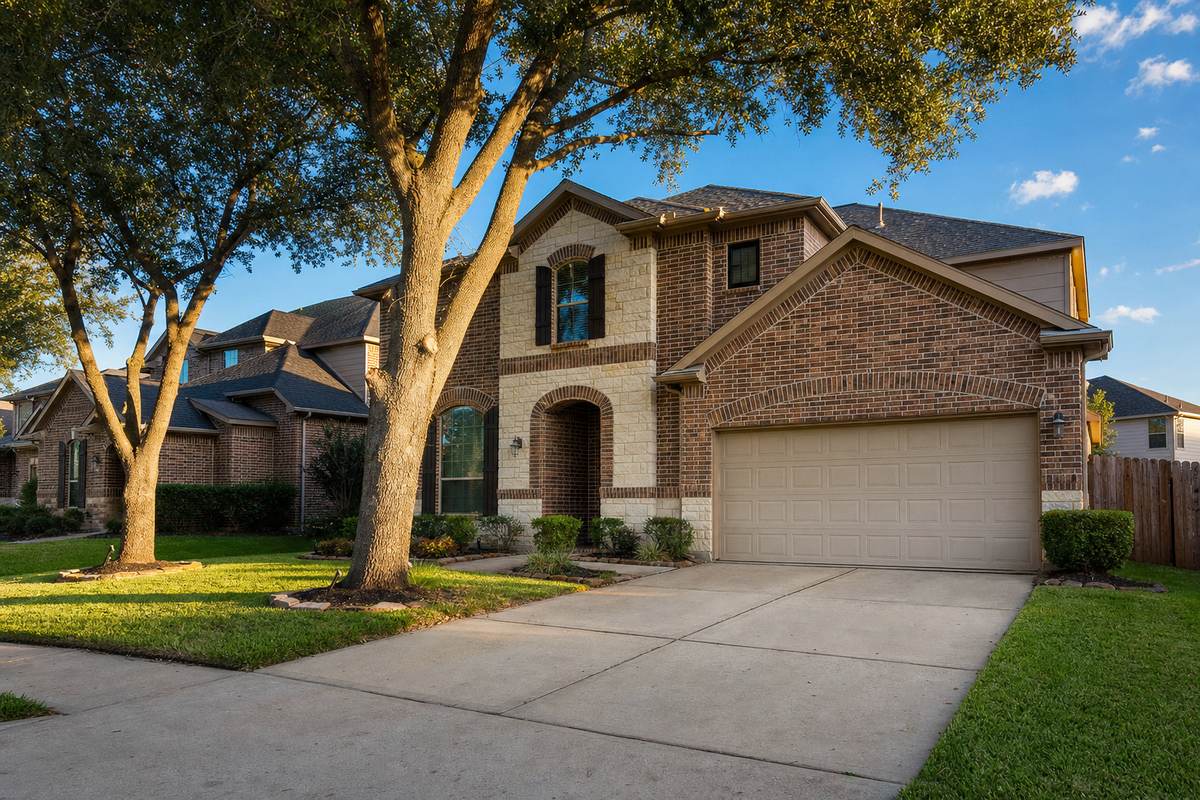
Selling your home in Katy means selling to a buyer who will check four things before the kitchen: which school district and county the address sits in, the full combined tax rate with the MUD line included, the flood history on the lot, and what the builders ten minutes away are offering on a brand-new house. I’m Kevan Pewitt, a REALTOR®, a licensed Texas real estate broker since 1989, and the broker-owner of Houston Prime Realty. The way I work with Katy sellers is to have those four answers ready before the listing goes live, price the home from closed sales in its own section of the community, and negotiate every offer on what you net after concessions rather than on the headline number.
Market figures as of October 2026. Houston-wide, HAR’s September 2026 report counted 40,192 active single-family listings, 5.5 months of inventory, 58 days on market, and a $325,000 median. In Katy, per my HAR MLS pull on October 17, 2026, there were 2,556 active single-family listings, 610 under contract, and 3,190 closings in the prior six months at a median sale price of $349,900 and a median of 25 days to contract. The figures are refreshed when HAR’s next release lands.
What Katy buyers check before they make an offer
Katy is one mailing address covering several different markets. A Katy address can sit in Harris, Fort Bend, or Waller County, inside or outside the City of Katy, in Katy ISD, Lamar CISD, or Royal ISD, and in any of dozens of utility districts, and the serious buyers here know it. By the time they tour your house they have usually run the address through the school locator and a tax site, so the question is whether they get the answers from you, cleanly and early, or piece them together on their own and discount for the uncertainty. Here is what they look at, with the ranges I see across the Katy communities I work.
The school district on the parcel
Most of Greater Katy is Katy ISD, whose 181-square-mile boundary runs ten comprehensive high schools and reaches into Harris, Fort Bend, and Waller Counties. The Fulshear side is Lamar CISD, and the far northwest edge touches Royal ISD. The line does not follow the community sign: in Firethorne, one homeowners association and one utility district serve both halves, but the original Firethorne sections are Katy ISD and Firethorne West is Lamar CISD, set by the plat series. In Sunterra, most sections are Katy ISD and the western ones are Royal ISD. A buyer who has already confirmed the campuses for your address will pay for them; a buyer who assumed and was wrong will walk, usually during the option period after you have already taken the home off the market. I confirm the zoning at the address level before we list, so the listing says exactly which campuses serve the home.
The combined tax rate, MUD included
Nearly every Katy home sits inside a municipal utility district, a MUD, that taxes the homes it serves to repay the bonds that built the water, sewer, and drainage; a few newer communities also carry a public improvement district assessment on top. How much of that debt has been paid down is why two Katy houses at the same price can cost very different amounts to own, and Katy buyers compare that line the way they compare square footage. Using the adopted rates I have verified for the communities I write about: Lakes of Katy, with no MUD at all, runs about 1.83 percent combined for 2025; Firethorne adopted 2.2041 percent on its Katy ISD side and 2.2260 percent on its Lamar CISD side for 2026. Cinco Ranch runs roughly 1.8 to 2.7 percent on the 2025 rates depending on the section and its MUD, Ventana Lakes was about 2.79 percent for 2025 with a MUD rate that has dropped every year since 2016, and Sunterra was 3.28 to 3.35 percent for 2025 depending on which county and school district the lot sits in, with each of its five MUDs levying $1.50 per $100 of value. On a $350,000 sale, 1.83 percent is about $6,405 a year in property tax and 3.35 percent is about $11,725, which is roughly $443 a month in the buyer’s payment.
If your home is in an established section with a falling MUD rate, that is a selling point and it belongs in the listing with the number and the year beside it. Texas also requires the seller to give the buyer written notice of the district and its rate before the buyer signs the contract (the notice to purchasers under Water Code Section 49.452, which I explain in my MUD district guide), and I prepare that notice with the listing paperwork so it is ready the day an offer comes in.
The county line and the city limits
The county decides which appraisal district values the home, which tax office bills it, and which flood map viewer a buyer will use to check it. The City of Katy adds its own line for the homes inside the limits: Cane Island, for example, was annexed by the city and carries the city’s rate alongside its MUD rate, with city water, sewer, trash, police, and fire in return. Most of Greater Katy is unincorporated, served by the MUD and the county. Buyers do not always know which they are looking at, and a listing that says it plainly saves a week of back-and-forth.
The HOA documents and the resale fees
Almost every Katy community is deed-restricted with a mandatory association, and buyers ask early about the dues, the restrictions that affect them (fences, outbuildings, rentals, exterior colors), and what the association charges at resale. Firethorne’s recorded fees, to give one real example, are $900 a year in dues plus a $275 transfer fee and a $375 resale certificate at closing. The title company orders the resale certificate as part of its closing process, and the contract decides who pays each charge, so I pull the recorded dues and fee schedule before we list and we decide together how to handle them in negotiations, well before they show up on a settlement statement.
Flood history and disclosure in Katy
In my experience, Katy buyers look up flood history before they tour, and the Barker Reservoir is why. The reservoir’s flood pool reaches into the Cinco Ranch side of Katy, and parts of that area, Canyon Gate among them, took water in 2017 as the pool filled behind the dam; the Addicks pool is its twin north of I-10. Most of Katy did not flood, and plenty of homes near the reservoirs have never taken water. The buyers here check anyway, and the tools are free: the Harris County Flood Education Mapping Tool for Harris County addresses, and FEMA’s Flood Map Service Center for the official map on any address, including the Fort Bend and Waller sides.
The Texas Seller’s Disclosure Notice (Texas REALTORS® form 1406, revised June 15, 2026) asks you about water in two groups. Three questions are about history: previous flooding due to a failure or breach of a reservoir or a controlled release from one, previous flooding due to a natural flood event, and previous water penetration into a structure due to a natural flood. Five questions are about location: whether the property sits wholly or partly in a 100-year floodplain, a 500-year floodplain, a floodway, a flood pool, or a reservoir. Separate lines ask whether you carry flood insurance, whether you have ever been unable to insure the property, whether you have ever filed a flood claim, and whether you have ever received FEMA or Small Business Administration assistance for flood damage. Texas Property Code Section 5.008 requires you to disclose what you know; it does not require you to know things you do not. I wrote up every one of those lines, with the definitions, in Houston’s flood disclosure questions, mapped, and the seller’s-side walkthrough of the whole form is in the Texas seller’s disclosure explained.
Answering early protects the sale. A buyer who finds a reservoir-release history on the map after they are under contract treats it as a surprise and renegotiates or leaves; a buyer who read it in the disclosure on day one, next to the repair invoices and the elevation certificate, prices it in and keeps going. If your home took water and was repaired, I put the documentation in the listing file so the answer arrives with the evidence. If it never did, the disclosure says so and the buyer’s own map check confirms it. Either way, the Texas contract gives a buyer who receives the disclosure late a right to terminate, so the form goes out with the listing.
Competing with new construction
If you are selling in 77493, you are competing with builders directly. On October 17, 2026, HAR MLS showed 1,353 active single-family listings in 77493 and 680 of them were flagged as new construction, half the ZIP. The picture is different on the other side of town: 77494 had 523 active listings with 37 new, and 77449 and 77450 together had 687 with 56 new, so the east side and the Cinco Ranch side are resale markets. Of the 610 Katy homes under contract that day, the 490 in pending status had a median year built of 2026, which tells you where a large share of the buyers are going.
What pulls those buyers is rarely the sticker price. Builders would rather keep the sales price intact, since every closing becomes a comp for the homes next door, so they offer a lower interest rate through their preferred lender, help with closing costs, or upgrades instead. On inventory homes, most builders offer a substantially lower rate through their preferred lender; that rate is lender pricing rather than a credit the buyer has to fit under a lender’s cap, and it is a more common form of incentive than a buydown credit. My October 2026 builder incentive roundup lists the current verified offers, including rates under 5 percent and flex cash up to $55,000 on select inventory homes. How a buyer compares that package against a resale with a seller concession, with the worked examples and the lender caps, is in new construction vs. resale in Houston, so I will not repeat the math here.
Here is what a resale seller in Katy does about it. Price against what the buyer nets after the builder’s incentive: if the builder’s rate saves a buyer $200 a month, that is the gap your home has to close on something else. Where it makes sense, match the builder’s move with a seller-funded rate buydown or a closing-cost credit written into the offer, which moves the buyer’s monthly payment further than a price cut of the same dollars and leaves your sale price, and your neighbors’ comps, intact. Then lean on what the builder cannot offer: a mature MUD with a lower rate (Ventana Lakes at about 2.79 percent next to Sunterra at roughly 3.3 percent, both 2025 rates, is the clearest Katy example), a larger lot and more square feet for the same money in the established sections, finished landscaping, blinds and a fence already in, and a closing date the buyer picks, with no build schedule to wait on. A buyer who sees those lines side by side can make a real comparison, and the ones who want an established neighborhood will choose it when the net is close.
Selling your home in Katy right now: the market you’d be selling into
HAR’s September 2026 report, released October 14, 2026, put Greater Houston at 40,192 active single-family listings, up 6.3 percent from a year earlier, with 5.5 months of inventory, 58 days on market, and a median sale price of $325,000. I keep the running commentary in my September 2026 Houston market snapshot. HAR’s own market-area updates for September had Katy–Southeast at 4.1 months of inventory and about 33 days on market, and Katy–Southwest, the Cinco Ranch and Seven Lakes side, at 4.9 months and about 39 days.
My HAR MLS pull for Katy on October 17, 2026 (the MLS city field, which covers every Katy mailing address inside and outside the city limits) fills in the rest. If you are selling your home in Katy this fall, this is the pace you are selling into. Over the prior six months, 3,190 single-family homes closed at a median sale price of $349,900, a median of 98.1 percent of the final list price and 95.9 percent of the original list price, and a median of 25 days to contract. The median closed price after seller concessions was $340,000. Against 2,556 active listings, that pace works out to about 4.8 months of inventory, which I read as balanced. The active listings had been sitting a median of 51 days, roughly twice as long as the homes that sold, and that gap is where the pricing lesson sits.
Homes priced to the closed sales in their own section are going under contract in about a month; homes priced above them are the ones still sitting at 51 days, and the spread between 98.1 and 95.9 percent is a fair picture of what a later reduction costs. Seller concessions are a normal part of a Katy closing right now; that is the seller’s side of the argument I made in why this is a good time to buy in Houston. If rates ease, some of that room goes back to the seller, and if they do not, the concession is the tool that keeps your price. And the launch matters more than the eventual price, because a new listing meets its largest audience in its first two to three weeks. How the list price itself gets built, from closed sales adjusted one difference at a time and set against the current competition, is in how real estate agents price homes in Houston.
How I work with Katy sellers
I’m a REALTOR®, a licensed Texas real estate broker since 1989, and the founder of Houston Prime Realty, which I opened in 1995. My clients rate the experience 5.0 out of 5.0 across 229 verified surveys on HAR.com. You work directly with me from the first conversation to the closing table, and the process on a Katy listing runs like this.
- The address-level homework, before the sign goes up. I confirm the county, the school district and campuses on the parcel, the full combined tax rate with the MUD line and the year it was adopted, the flood map and any history, and the association’s recorded dues and resale fees. All of it goes into the listing so the buyer’s questions are answered before they are asked.
- A price built from your section’s closed sales, and a net sheet. I price from recent closings in your part of the community, adjusted for the differences, and set against what is competing for the same buyer this month. I also hold a Texas residential appraiser license, so I look at your home the way the buyer’s appraiser will, and the price we set is one the appraisal will support. You get a seller net sheet at two or three prices before you sign anything, and a plain answer about why the highest number in the room is usually the most expensive one.
- Preparation and presentation. I tell you which repairs and updates will earn their cost back in Katy and which will not, we handle the items a buyer’s inspector will flag, and the home is photographed and presented professionally. My appraisal checklist for sellers covers the fixes that protect the appraised value.
- Marketing with real reach. The listing goes on the HAR MLS and syndicates to the major portals, goes out to my buyer database and past clients, and runs on social media and in my app, which pushes new-listing alerts to buyers with matching saved searches. The full plan is in how I market your Houston home.
- Offers compared on net. When offers come in, I lay them out on the number you keep after concessions, repairs, and closing costs, alongside the financing, the option period, and the closing date, and I negotiate from there. Whether you offer anything toward the buyer’s real estate agent is your decision, made in writing in the listing agreement and negotiable offer by offer; it is handled within the transaction, and I walk you through it before we list. The details are in who pays the real estate buyer’s agent in Texas.
- Contract to closing. I manage the option period, the inspection response, the appraisal, the title work, and the lender’s timeline, and I keep you informed at each step so the closing date holds.
You can judge any real estate agent on the same substance, including me. Ask which school district a specific Katy address is in and how they confirmed it; ask what the combined tax rate is at that address and which MUD serves it; ask whether the section sits in the Barker flood pool; ask to see the closed sales behind the price they quote and whether the active listings they are comparing you against have actually sold; and ask for a net sheet alongside the list price. A real estate agent who works Katy answers each one in a sentence. The longer list of questions is in questions to ask a REALTOR® when selling, the decision framework is in how to choose a REALTOR®, and the whole Katy market, community by community, is on my Katy REALTOR® page. My overall approach to representing sellers is on the selling page.
Questions Katy sellers ask me
Who should I hire to sell my home in Katy?
Hire a real estate agent who can answer the Katy-specific questions before your buyer asks them: the school district and campuses at your address, the combined tax rate and the MUD behind it, the flood history and map status, the association’s resale fees, and what the builders in 77493 are offering this month. Then check that the price they propose is built from closed sales in your own section, that it comes with a net sheet, and that their marketing reaches beyond the MLS. I’m Kevan Pewitt, a REALTOR® and licensed Texas real estate broker since 1989, and I do that address-level work on every Katy listing, so selling your home in Katy starts with the answers already in the file. My clients rate the experience 5.0 out of 5.0 across 229 verified surveys on HAR.com, which you can read for yourself before you decide.
How long does it take to sell a house in Katy?
Katy homes that sold in the six months ending October 17, 2026 took a median of 25 days to go under contract, per my HAR MLS pull, and HAR’s September 2026 market-area updates put Katy at about 33 to 39 days on market depending on the side of town. Add roughly 30 to 45 days from contract to closing for a financed buyer. The homes still active that day had been listed a median of 51 days, so the spread between a month and two months is mostly price and condition.
Do I need to disclose flooding in Texas?
Yes. The Texas Seller’s Disclosure Notice asks whether you are aware of previous flooding from a reservoir breach or controlled release, from a natural flood event, or water penetration into a structure, and whether the property sits wholly or partly in a 100-year floodplain, 500-year floodplain, floodway, flood pool, or reservoir, plus flood insurance, claim, and FEMA or SBA assistance history. Texas Property Code Section 5.008 requires you to disclose what you know, and a buyer who receives the notice late has a right to terminate, so answer it fully and deliver it with the listing.
How do MUD taxes affect my sale?
The MUD line is part of the combined tax rate every Katy buyer compares, so a lower, falling rate in an established community is a selling point worth stating with its year, while a rate above 3 percent in a newer section is a cost the buyer will price into the offer. On a $350,000 home the difference between 1.83 percent and 3.35 percent combined is about $443 a month. Texas also requires the seller to deliver a written notice of the district and its rate before the buyer signs the contract, which I prepare with the listing paperwork.
Should I sell before or after buying my next home in Katy?
In a balanced market with roughly five months of inventory, selling first is usually the safer order: you know your net, you are not carrying two payments, and your offer on the next home is not contingent on a sale. If you need to buy first, a Texas contract addendum allows an offer contingent on the sale of your home, a temporary lease-back after closing can give you time to move, and a well-priced Katy home is going under contract in about a month. We map the two timelines together before you list.
What does it cost to sell a house in Katy?
The costs come out of your proceeds at closing: real estate compensation as set in your listing agreement, any amount you agree to pay toward the buyer’s real estate agent or closing costs, the owner’s title policy if the contract has you paying it, escrow and recording fees, your prorated property taxes through closing, the association’s transfer and resale certificate charges, any repairs negotiated after inspection, and the payoff of your mortgage. Texas has no transfer tax. I walk through each line in what it costs to sell a home in Houston, and you get a net sheet for your home before you list.
Thinking about selling your home in Katy?
If you are six to twelve months out, this is a good time to talk. I’ll pull the closed sales for your section, check the district, the tax rate, and the flood map at your address, and give you a net sheet at two or three prices so you can see what selling your home in Katy would actually put in your pocket. There is no pressure and no obligation, and if the right answer is to wait, that is what I’ll tell you.
Schedule a Consultation
Call or Text (281) 500-7077
Kevan Pewitt · REALTOR® & Broker · Houston Prime Realty
Last updated: October 2026 · Houston figures from the Houston Association of REALTORS® September 2026 report (released October 14, 2026) and HAR’s September 2026 market-area updates; Katy figures from the HAR MLS, Katy single-family by MLS city field, pulled October 17, 2026 (data not verified or guaranteed by the MLS); tax rates are the 2025 and 2026 adopted combined rates cited in the linked community guides; disclosure language from Texas REALTORS® form 1406 (06-15-26) and Texas Property Code §5.008. Builder offers change without notice. General information, not legal, tax, or lending advice. This post is refreshed when HAR’s next release lands.
More on this topic: selling a home in Houston →
